In this month’s blog, I am going to introduce you to the paper that comes to mind when asked what initially inspired me to delve deeper into evolutionary ecology. I have always enjoyed the concept of the ‘Red Queen’ hypothesis since I first learned about it in secondary school, but it was studying this paper in the second year of my degree that really solidified my decision to form my research career around evolution and ecology over any other area of biology.
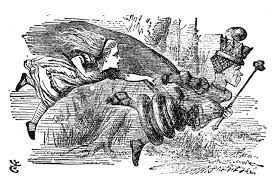
In evolutionary biology, ‘Red Queen’ dynamics describes the process of host-parasite or predator-prey interactions, where each member must evolve as fast as is necessary to survive or ‘overtake the other’ in an evolutionary ‘arms race’. Without evolving to become faster, a gazelle would be constantly outrun by the cheetah, thus leading to its extinction. The name behind this concept originated from Lewis Carroll’s Through the Looking Glass, in which the Red Queen explains to Alice that to survive in this world one must run as fast as possible to remain in the same place. An inherent problem with this intriguing theory is that it is difficult to observe evidence of co-evolution between antagonistic organisms leading to reciprocal evolutionary dynamics. This is primarily due to the difficulty of tracking these interactions over time in a natural environment, because lots of generations are needed to observe evolutionary dynamics.
Apparently, answering this fundamental issue involves digging up pond mud! The eggs of the water flea, Daphnia magna, and the spores of its microparasite, Pasteuria ramosa, can survive in pond sediment for many years in their dormant form. Decaestecker and her colleagues utilised this unique opportunity of archived gene pools to reconstruct the evolutionary dynamics of this population that has been preserved in layers of pond sediment. They extracted cores of sediment, where each depth corresponded to a generation of the water flea and microparasite population (Figure 1). Essentially, each layer provided a snapshot of the antagonistic arms race as it occurred. In a series of experiments, the Daphnia eggs from each layer were revived, cloned and exposed to a parasitic ‘time-shift’. This meant that clones of each host were subjected to infection by the parasites from the next layer up, the same layer and the next layer down. In other words, the Daphnia in each layer were exposed to ‘future’, ‘contemporary’ and ‘past’ parasites.
It was this extremely clever experimental concept that, to this day, inspires me to become a scientific researcher who innovates similarly creative solutions to big evolutionary problems!
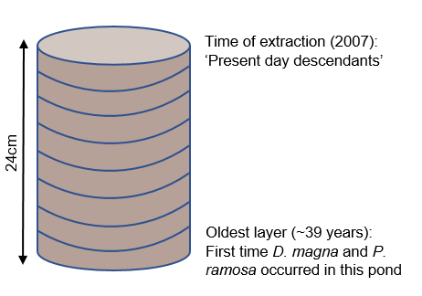
Figure 1 – A representation of the experimental set-up. Each layer contains a different population of Daphnia and Pasteuria from where sediment has built up over time.
The researchers found that the average infectivity was lower when Daphnia were exposed to ‘past’ (0.55) and ‘future’ (0.57) parasites compared to ‘contemporary parasites (0.65) from the same sediment layer (Figure 2). Ultimately, the fact that contemporary microparasites were more infectious than past and future parasites means that they are undergoing quick evolutionary changes. Reduced infectivity in future years shows that the parasites are rapidly adapting to infect the hosts of their own time period, and therefore lose their adaptations to former hosts. This is consistent with the theory of negative frequency-dependent selection, which is where the fitness of a particular phenotype becomes lower as it becomes more common.
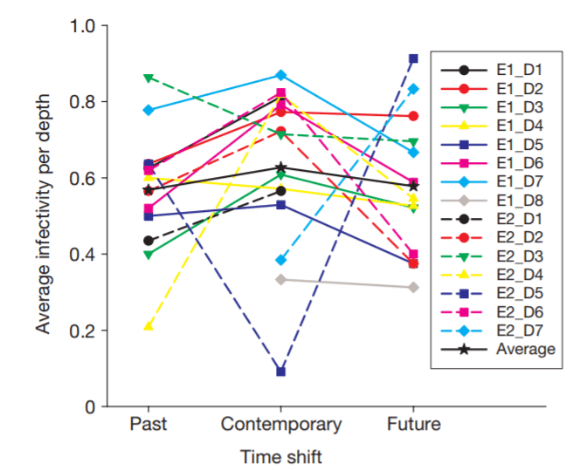
Figure 2 – The average proportion of infected hosts when pitted against past, contemporary and future parasites. The black stars show average infectivity. This figure was taken from Decaestecker et al., 2007.
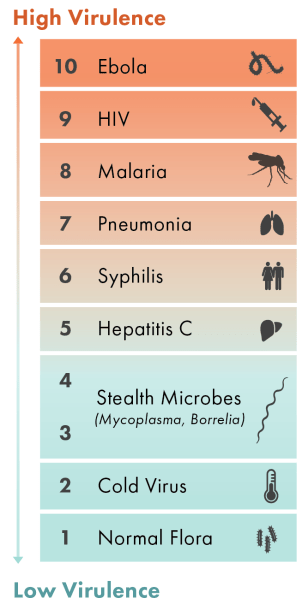
The study also revealed there was a gradual increase in virulence over time. This means that although the parasite’s ability to infect the host did not become better, the negative effect caused by the parasite became stronger. A human context may be easier to understand – many people regularly catch a strain of the flu that does not have bad symptoms, making it very infectious but not very virulent. On the other hand, some influenza viruses are not very common, but can cause a great amount of damage to their human host – this is not as infectious but is highly virulent. In the context of this study, the higher virulence in more recent generations of the microparasite implies that its fitness has increased over time.
Figure 3 – Virulence is the ability of a pathogen to cause illness – this varies between microbes. Ebola is highly infectious and highly virulent – it spreads rapidly and makes the host severely ill. In general, the more virulent a pathogen, the less common it is. Credit: https://rawlsmd.com
However, the consistent infection rates between contemporary hosts and parasites throughout time illustrates that the increase in virulence has had little overall effect on the Daphnia. Clearly, as the parasites evolve to become more virulent, the water flea population adapts accordingly. This stalemate between the antagonists is a clear sign that Red Queen dynamics and a coevolutionary arms race is in action!
Reference
Decaestecker et al., 2007. Host-parasite ‘Red Queen’ dynamics archived in pond sediment. Nature, 450, pp. 870-873. Available at: https://www.nature.com/articles/nature06291
 Alice's Arms Race