Evolution has always been a blind and purposeless process, guided by random genetic mutations and pressures from the environment. Charles Darwin wrote in Origin of Species that natural selection “is immeasurably superior to man’s feeble efforts, as the works of Nature are to those of Art.” However, this book was published in 1859. Is natural selection still relevant in human evolution today? To what extent are we humans now the ones in control of our own evolution? If you can drive a car, does the ability to run fast matter anymore? The aim of this month’s blog is to explain both sides of this controversial topic and explore the importance of biological evolution compared the adaptations we have devised with our own brains.
Natural selection is the evolutionary process that occurs when heritable, genetic variation between individuals results in fitness differences. Fitness differences means that survival and the number of offspring produced differs between members of a population. This variation causes the frequency and distribution of human traits to vary between generations. To summarize, natural selection acts on individuals and affects the phenotypic distribution of populations. It is very common – there are very few traits that have not at some point been acted upon by natural selection (Endler, 1986). Most argue that natural selection is ultimately one of the most important mechanisms for evolution in the natural world. However, in an age where humans are seldom chased by predators and live in urbanised landscapes, is natural selection still driving our evolution?
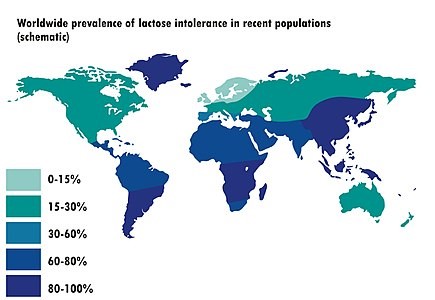
Essentially, so long as people do not make equal contributions to the next generation, humans are still evolving. Dozens of genes have been found to still be significantly influenced by selective pressures since the domination of Homo sapiens 13,000 years ago. Natural selection still shapes body mass index, protection against malaria and infectious diseases and the ability of some human populations to breathe more efficiently at higher altitudes. The evolution of the enzyme lactase is another a classic example. Before the domestication of cattle, the gene that enabled milk digestion was switched off after babies grew up. After the rise in dairy farming, the genetic mutation that enabled certain people to digest milk as adults became something that aided survival, as it is an extra source of nutrition. You can see on the map below that lactose tolerance is still spreading, which demonstrates how this trait has evolved quite recently. However, scientists are quick to caution that not every morphological change is a result of natural selection or even genetic evolution. For instance, the average increase in height in industrialised countries is primarily due to improved diets over the last 150 years.
Scientists have known for a long time that natural selection is not an all-powerful evolutionary force that produces perfectly engineered traits, both for humans and every other living organism. This selective process has fundamental restrictions due to genetic constraints, environmental limitations, trade-offs and the existence of complex evolutionary histories. For example, even if it were advantageous to evolve wings to fly, this switch cannot happen simply because the development of arms is embedded in the genetic makeup of humans. This is exactly where the next argument comes in – why develop wings if we have already invented the aeroplane? Technological advances mean that there is no significant evolutionary pressure to produce wings to begin with. The exponential growth in medical and technological developments that protect us from the dangers of our environment raises the question: what remains for natural selection to act upon? Ultimately, one could argue that natural selection has been superseded by scientific progress.
Developments in culture, medicine and technology have ultimately changed the evolutionary rules. In developed countries, it is no longer survival of the fittest, but the survival of virtually everyone. As most people are living long enough to pass on their genes, selective pressures that operated 100 or so years ago have ‘relaxed’ and the process of natural selection has slowed down. The ability to travel extremely long distances with ease has given us the ability to share genes with anyone, thus ending the geographical isolation that hindered our ancestors and decreasing the chance of evolutionary change. Furthermore, many people decide not to have children these days. This combined with our extended lifespan, naturally slow reproductive rate and long pregnancies means that, at this rate, an advantageous mutation would take thousands of years to spread. With this in mind, how powerful can natural selection really be? In the short term, no-where near as impactful as the evolutionary powers that we have given ourselves. Regardless of impact, natural selection is likely to be acting on different traits now compared to pre‐industrial human populations.
More recently, humans have not only been unintentionally guiding their own evolution. For the first time, humans are gaining control. Scientific developments in genome editing has made it possible to eradicate genetic diseases and create ‘designer babies’. Many projects to combine technology with the human body and enhance our capabilities are being worked on as we speak: giving the blind sight using genetic modifications and developing cochlear implants for the deaf are just a couple of examples. During the pre-industrial period, people with life-changing impairments may not have lived long enough to pass their genes onto offspring. Therefore, their traits would normally be removed by natural selection. In addition, the ability to genetically modify embryos and create ‘designer babies’ is no longer a futuristic possibility, but a reality. Embryo selection is already common practice through Pre-implantation genetic screening (PGS), which identifies embryos with genetic diseases during the IVF process. The technology to select and genetically modify our future offspring could have significant implications for the evolution of our species if it were common practice. No need to panic just yet – we will not be doing anything like this anytime soon:
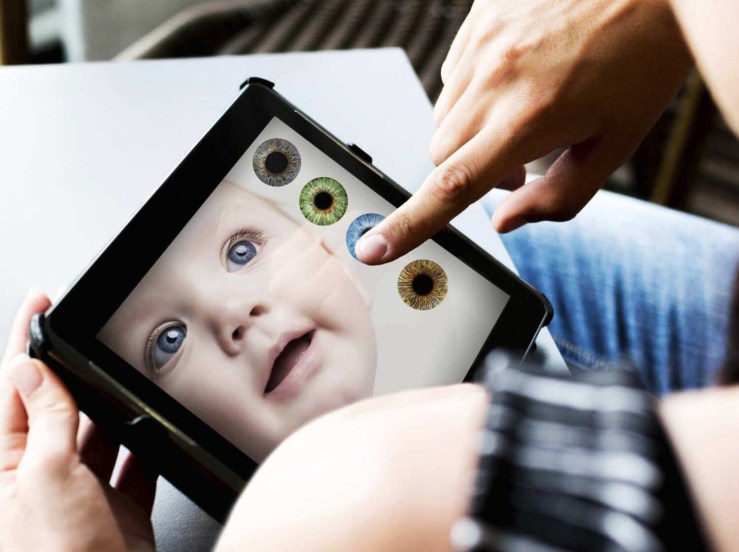
This is an extreme, but not impossible, example of how we could end up driving our own evolution. Credit: Genetic Literacy Project.
It is becoming more and more difficult to distinguish between whether trait evolution is driven by natural selection or by us. Ultimately, the extent of the power of natural selection is unknown, but it is certainly not omnipotent. What defines ‘natural’ selection in the rest of the animal world may not apply to us anymore. Genome editing and embryo selection are obviously the most invasive interferences with our evolution, but what traits are evolving differently due to unintended consequences of our meddling? Most genetic changes in humans, such as the gene coding for lactase, has been driven by cultural and technological advancements, making the line between natural selection and human interference blurred. Whilst you could argue that the evolutionary trajectory of humans is just as likely to be driven by nature as by us, you could also claim that evolution is no match for the variety and speed of everyday modern life. In the end, our evolution may depend much less on how the planet changes us, but increasingly more so on how we change the world.
I have simply provided a brief insight into the various arguments given by scientists that insist natural selection is still prominent and those who argue we have taken over. Personally, I think most traits will have influence from both natural selection and human intervention, and that this topic remains a grey area. What do you think?
 Alice's Arms Race
Nice write up. I think there is still a significant argument around how natural selection will enable some of the human race to service the next big natural or man made apocalyptic event. Whether it be the rise of the next superbug, asteroid impact, volcano eruption, ice age, global warming or world war.
LikeLike